
The Little Field That Fed a Village
By Maha · Published Sep 4, 2025 · Updated Sep 8, 2025
The Little Field That Fed a Village
The southwest monsoon had failed two years in a row. In Sembaneri village, tanks cracked open like clay pots. Wells coughed up dust. Drinking water came only by lorries from distant towns. Many farmers abandoned their fields and left for daily wage jobs in the city.
Children whispered about missing classmates. Some families had migrated. Only the elders sat by the empty tank, shaking their heads.


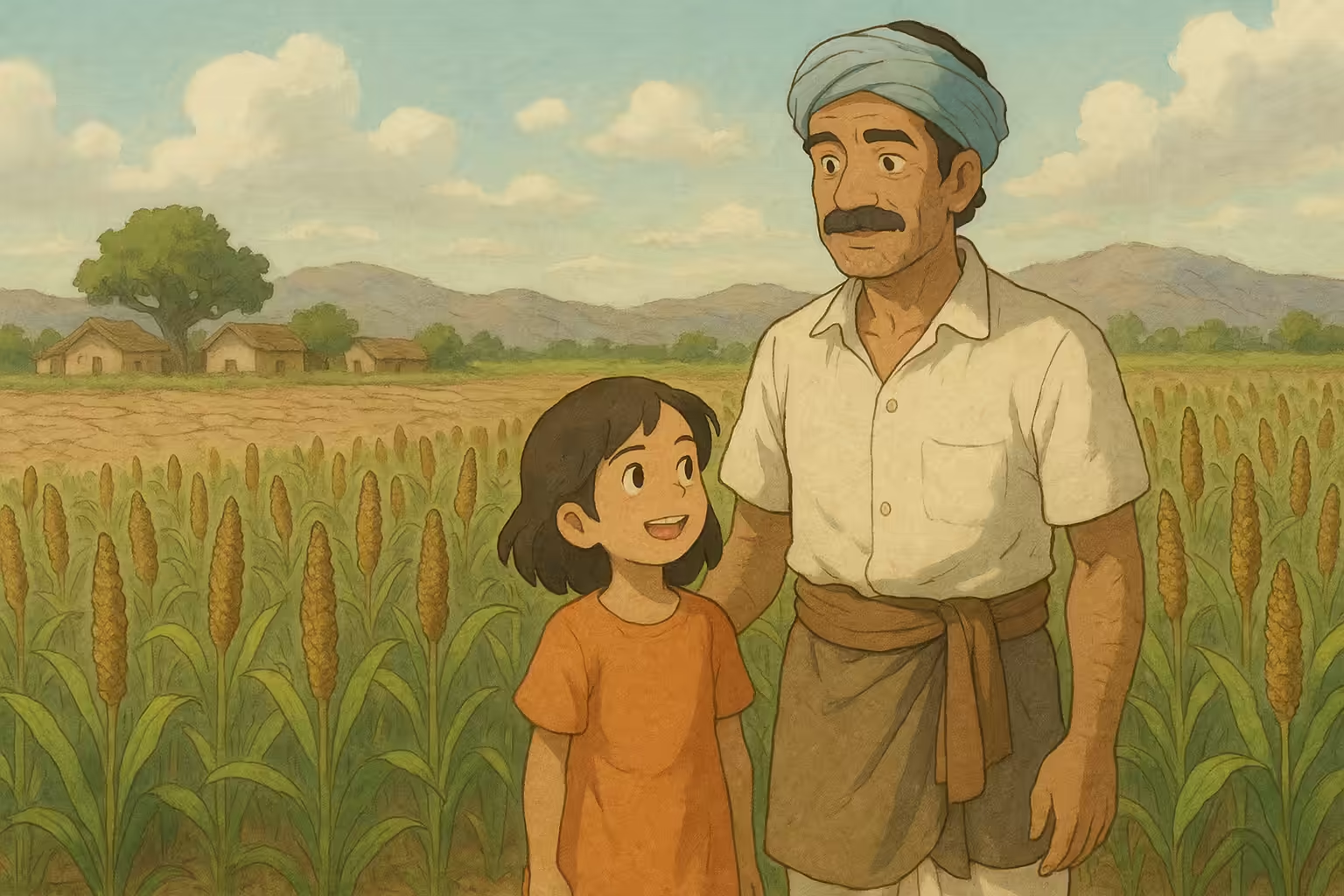
Meera, eight, lived with Appa in a hut near the fields. Last year, they too had planted rice like everyone else. The rains betrayed them. Only because their land was tiny, and Appa managed to pump just enough water, they saved a few sacks to eat at home. The government subsidy for drought relief helped them survive.
This year, Appa had a different plan. He remembered his grandfather’s words:
"In dry years, don’t chase paddy dreams. Sow what little water can carry."
So Appa chose millets, pulses, and greens—crops that drank less, but fed well. The government’s millet scheme gave seed support.
And every morning, Appa cycled ten kilometers to a neighboring tank, balanced pots on either side, and brought water back for his tiny patch. “Why struggle so?” neighbors asked. “Others earn faster in town.” But Appa only smiled and bent to the soil.
One afternoon, loudspeakers crackled in the school ground. A politician had come for election season—balloons, banners, sweets for children. He promised to bring water from the big river in lorries. He promised jobs and schemes and a glittering future, “Just wait a little, and everything will change!” The crowd clapped. Some believed. Others felt relief in hope.
Meera clapped too, eyes shining. “Appa,” she asked that night, “why don’t we wait like the others? Big men will fill the tanks for us.” Appa patted her head. “Help may come, kanna, but we must begin with our own hands,” he said, and shared the thirukkural:
உழுதுண்டு வாழ்வாரே வாழ்வார் மற்றெல்லாம்தொழுதுண்டு பின்செல் பவர்.Meera understood: promises may come later, but seeds must go in today.
Next morning at the field, Appa gave her a small spade. “Come. One row today. That is strong.” Meera loosened the top soil and tucked in seeds, while Appa handled the heavy lifting and water pots. So they worked. One row the first day. Two the next. Meera counted furrows with her toes. The soil smelled fresh, like the first rain on dry ground.


Within days, tiny green shoots pushed through the red soil. They bent gently in the evening wind, like little hands clapping in quiet applause. Meera grinned—her work was alive.

Weeks passed. Big fields lay dry. Many villagers left for town. Meera’s best friend stopped coming to school—her father now worked twelve hours in a city workshop. Rent was high, food cost more, and the girl missed her lessons. Meera felt sad, but Appa reminded her: “Farming may be slow, kanna, but it feeds us steady.”
Neighbors noticed the green patch. Hungry families shared Meera’s porridge bowl. Children, curious about the rows, joined in sowing. Soon even adults helped with weeding and harvesting. The labor of millet, once heavy, became light when many hands worked together.

Within weeks, the first small harvest of greens and early millet heads was ready. It was not grand, but it filled bowls and kept hunger away. Families who had nearly given up now tasted hope from Appa’s little field.

The planting that Meera and the neighbors had done together also grew steadily. By the time the northeast monsoon clouds finally gathered, this patch stood green and strong, ready to drink the rain. The rains filled the tanks, but Appa’s family and neighbors already had food to last.
Weeks later came the big harvest—heaps of golden millet from both Appa’s early rows and the community patch. It was enough to eat, enough to share, and even enough to sell at the market. Government buyers offered a fair price, thanks to the millet scheme.
The village elders said: “We left, but this family stayed. Their field fed us in our hunger.” And slowly, hope returned to Sembaneri village.
The temple called Appa to the stage to honor him. Appa shook his head. He lifted Meera’s muddy hand. “Honor this,” he said. “This hand knows the weight of water, the shape of work, and the joy of sharing.”
That night, Meera wrote on a scrap of paper and stuck it above her bed:
“Paper boats float for a while; little fields feed for long.”
She slept, dreaming of their rows stretching far into the future—green, steady, and endless.

- Screen-free, print-at-home fun your child can enjoy right away.
- Easy, meaningful moments together—color, read, talk, laugh.
- Your purchase keeps our free-to-read, Thirukkural-inspired stories flowing.
Share this tale
You may also like
- Nectar from the SkyThirukkural · Nature · Water · Gratitude · Kids
- The Extra MatThirukkural · Hospitality · Family · Kindness · Kids